
01
Choose the hand feel first
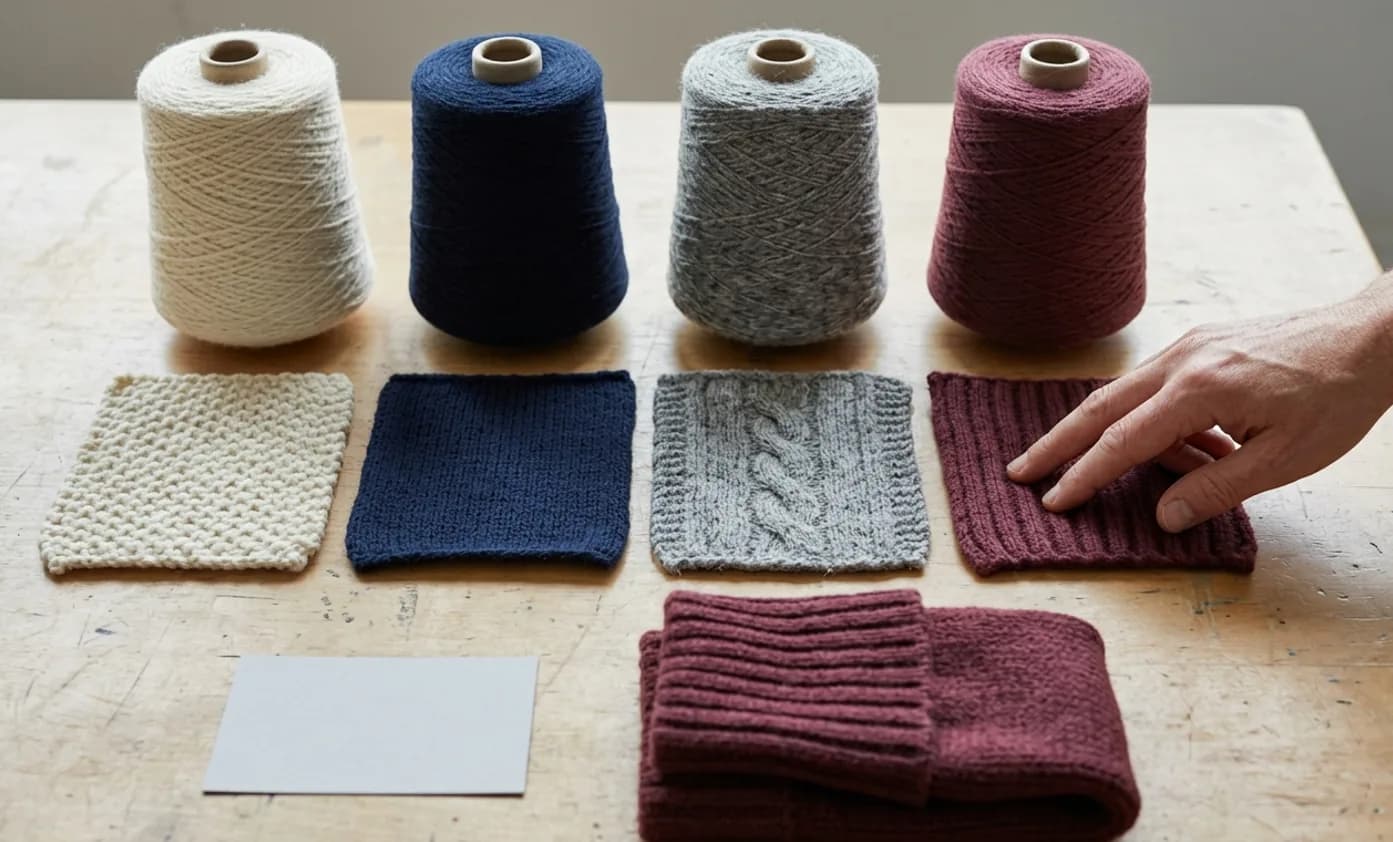
A soft merino blend, a cotton wool blend, or a chunky winter yarn will each create a different sample route and a different price target.
- softness and warmth
- pilling risk
- target retail positioning
Knit Development / 6 min read
Knit sweater development depends on how yarn, gauge, texture, artwork, and finishing work together. These choices shape hand feel, price, recovery, and how clear the first sample will be.
Quick answer
Understand how yarn blend, gauge, rib tension, and artwork method affect feel, price, and sample timing.
01
A soft merino blend, a cotton wool blend, or a chunky winter yarn will each create a different sample route and a different price target.
02
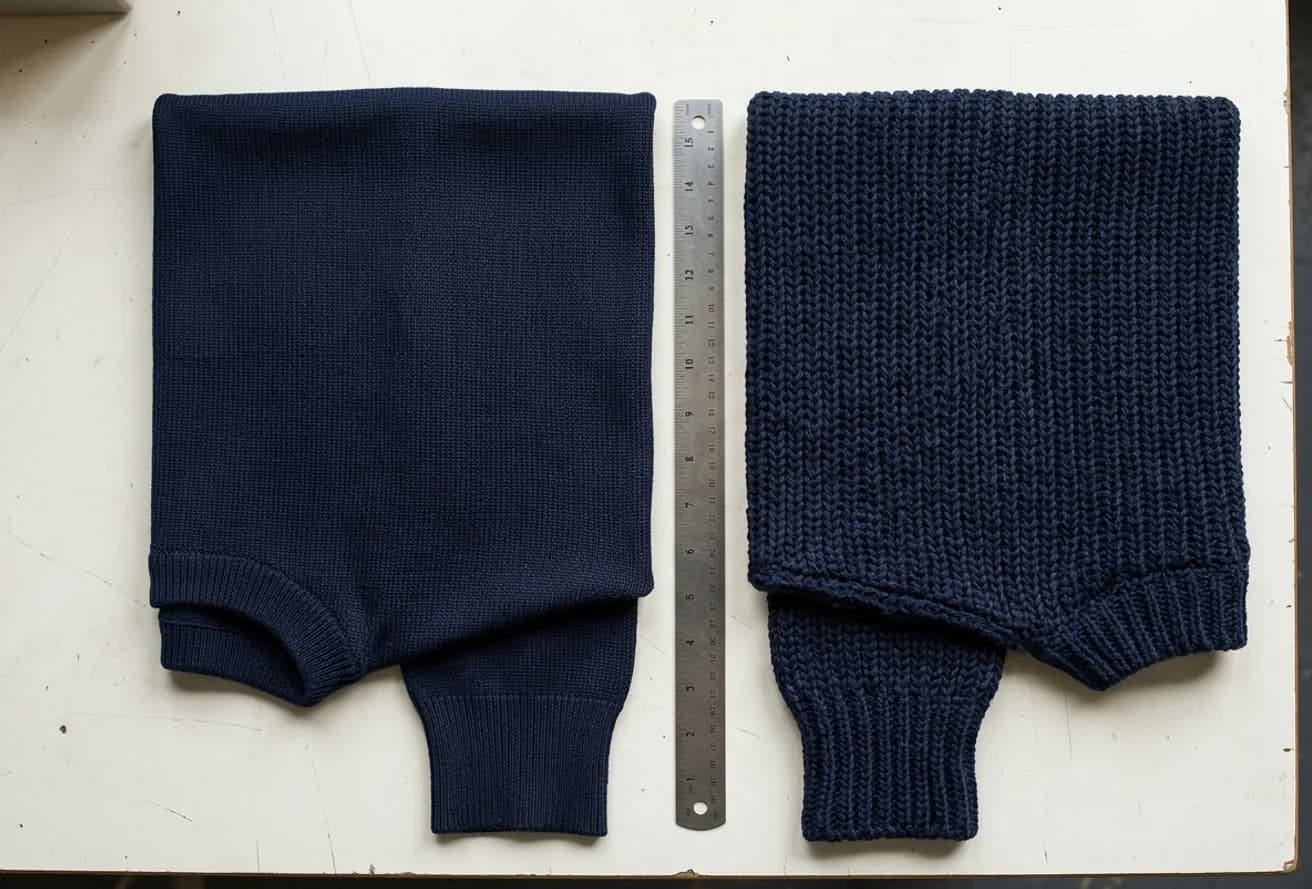
Gauge affects texture, drape, recovery, and graphic clarity. A boxy graphic sweater and a refined cardigan usually need different structures.
03
Jacquard, intarsia, embroidery, and woven labels each handle logo detail differently, so artwork should be reviewed before sampling rather than after.
Before you contact us
Send what you already have. A reference image or short note is enough to begin; these details help us make the first sample and quotation discussion clearer.
Keep the first sample useful
These are the details worth resolving before the next sample, material order, or approval stage.
Related services
Continue from the article into the service paths that can support the product decisions.
KNIT SERVICE
Develop knit sweaters for your label with yarn, gauge, fit, and artwork considered together.
SAMPLE ROOM
Test fit, materials, artwork, and construction in a reviewable sample before production.
Use this guide
A rough product direction is enough to begin. MAIDYN can help organize the next development decision from your references.